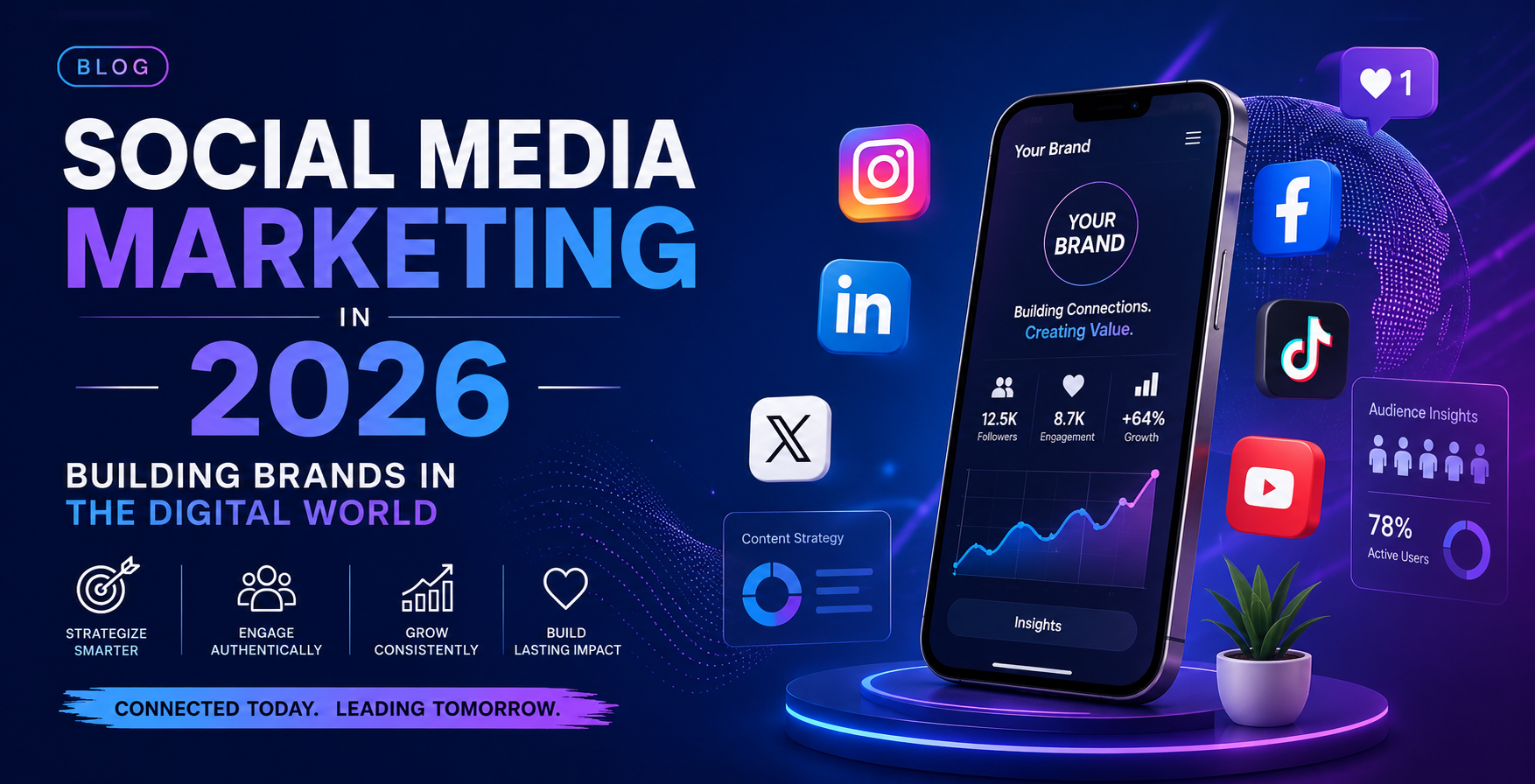
Social Media Marketing in 2026: Building Brands in the Digital World
Social media marketing has become one of the most important business strategies in today’s competitive digital environment. Businesses are no longer depending only on traditional advertising methods such as newspapers, television, or radio. Instead, companies are focusing on online platforms where customers spend most of their time daily. Social media allows businesses to communicate directly with audiences, promote products instantly, and build long-term customer relationships.
Platforms such as Instagram, Facebook, LinkedIn, YouTube, and TikTok continue to influence how brands interact with consumers. In 2026, businesses are focusing more on authenticity, short-form videos, personalized content, and customer engagement rather than direct sales-focused advertising.
The Growing Importance of Social Media Marketing
Consumers today expect brands to maintain an active online presence. Before purchasing products or services, many customers search for reviews, social media pages, and customer feedback online. A business with strong social media activity often appears more trustworthy and professional.
Social media marketing helps businesses:
- Increase brand awareness
- Generate customer leads
- Improve audience engagement
- Promote products and services
- Build customer loyalty
- Increase website traffic
- Boost sales opportunities
Even small businesses can compete with larger companies through creative and consistent social media strategies.
Content is the Heart of Digital Marketing
In modern social media marketing, content quality matters more than quantity. Users prefer content that is informative, entertaining, and visually attractive. Businesses are now creating content that connects emotionally with audiences instead of simply promoting products.
Popular content formats in 2026 include:
- Short-form videos
- Educational posts
- Interactive polls
- Behind-the-scenes content
- Customer success stories
- Live streaming sessions
- Infographics and carousels
Video marketing continues to dominate because it captures audience attention quickly. Businesses are using short videos to explain services, demonstrate products, and share industry tips in simple ways.
Personalized Marketing is Becoming Essential
Modern customers prefer personalized experiences. Businesses are now using customer behavior, interests, and engagement patterns to create targeted content. Personalized marketing helps brands deliver relevant advertisements and recommendations to the right audience.
For example, a fitness brand may show workout content to health-conscious users, while a technology company may target professionals interested in digital tools. This strategy improves customer engagement and increases conversion rates.
Personalized communication also strengthens customer trust because audiences feel understood and valued by the brand.
Influencer Marketing Continues to Grow
Influencer marketing remains a strong part of social media strategy in 2026. Many businesses collaborate with influencers, creators, and industry experts to reach targeted audiences naturally.
Unlike traditional celebrity promotions, brands are now partnering more with micro-influencers who have smaller but highly engaged communities. These influencers often create authentic content that feels more genuine to followers.
Businesses choose influencers based on:
- Audience relevance
- Engagement quality
- Content style
- Brand alignment
- Industry expertise
This approach helps businesses build stronger credibility and customer trust.
Social Commerce is Expanding Rapidly
Social media platforms are increasingly becoming shopping destinations. Customers can now discover, review, and purchase products directly through social media applications without visiting separate websites.
Features such as:
- In-app shopping
- Product tagging
- Live product demonstrations
- Instant checkout options
have simplified the customer buying journey. Social commerce helps businesses reduce purchasing barriers and improve sales performance.
This trend is especially beneficial for fashion, beauty, electronics, and lifestyle brands.
Importance of Customer Engagement
Successful social media marketing is not only about posting content regularly. Customer interaction plays an equally important role. Businesses that respond quickly to comments, messages, and feedback often create stronger relationships with audiences.
Engagement strategies include:
- Replying to comments
- Hosting live sessions
- Running contests and giveaways
- Sharing user-generated content
- Conducting polls and surveys
These activities encourage customers to participate actively and feel connected to the brand.
Challenges Businesses Face
Although social media marketing provides many advantages, businesses also face several challenges. Competition is increasing rapidly because almost every industry now uses digital marketing strategies.
Common challenges include:
- Maintaining consistent content quality
- Managing changing platform algorithms
- Handling negative feedback professionally
- Standing out in crowded markets
- Keeping up with new trends
Businesses need creativity, planning, and continuous learning to remain competitive in the digital space.
The Future of Social Media Marketing
The future of social media marketing will focus heavily on technology-driven experiences. Artificial intelligence, virtual reality, and advanced analytics are expected to improve how businesses interact with customers online.
Brands will continue investing in:
- AI-powered customer support
- Interactive video experiences
- Personalized recommendations
- Voice search optimization
- Community-based marketing
Consumers are also becoming more interested in transparent and socially responsible brands. Businesses that focus on authenticity, customer value, and ethical communication are likely to gain stronger audience trust in the coming years.
Conclusion
Social media marketing has transformed from a simple communication tool into a powerful business growth strategy. In 2026, businesses are focusing more on customer relationships, creative storytelling, and personalized experiences to succeed online.
Companies that consistently create valuable content, adapt to new trends, and maintain active engagement with audiences can achieve long-term digital success. As technology continues to evolve, social media marketing will remain one of the most influential tools for building strong brands in the modern business world.