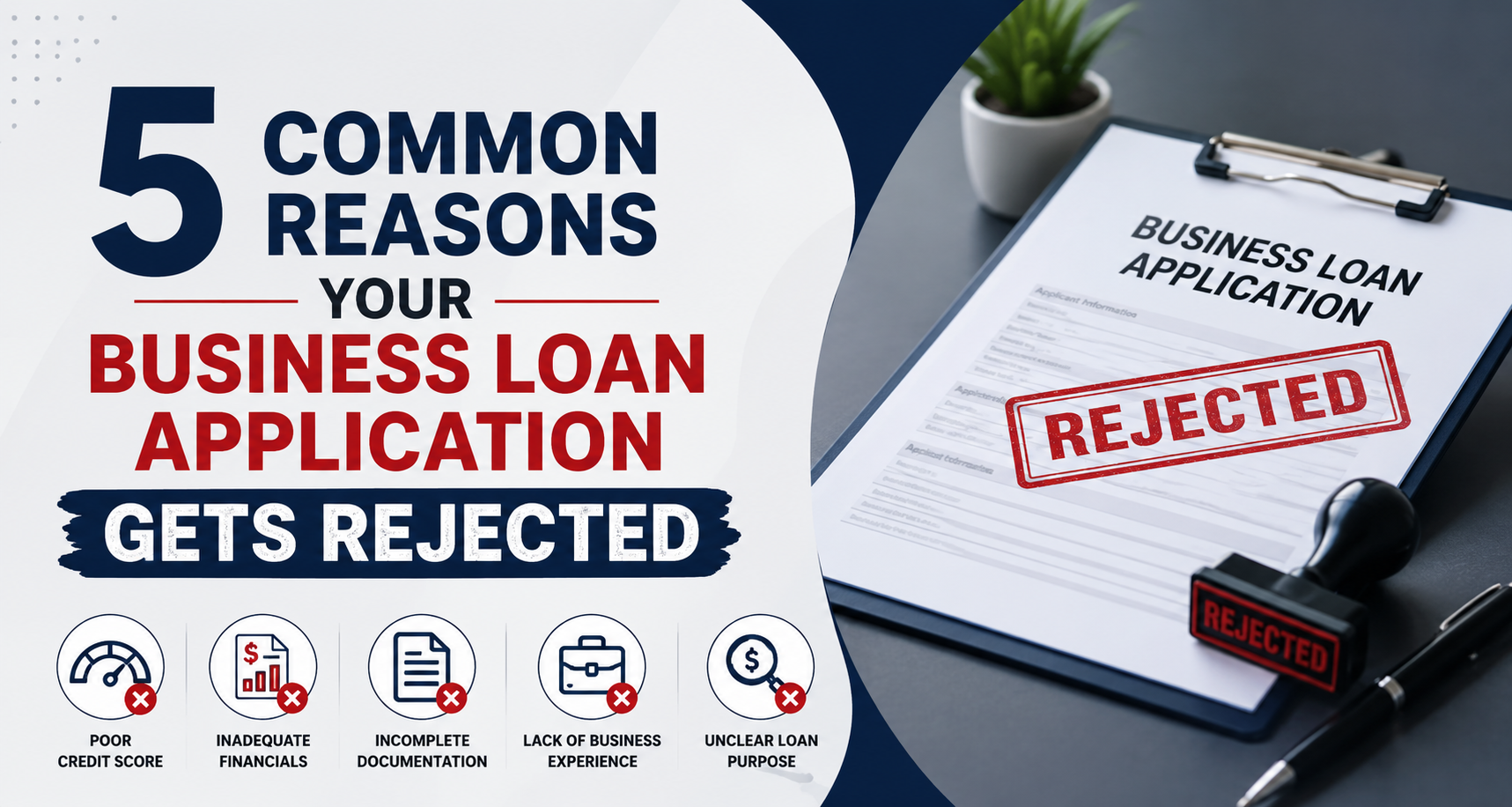
5 Common Reasons Your Business Loan Application Gets Rejected
Securing a business loan can provide the financial support needed to expand operations, purchase new equipment, hire employees, or manage day-to-day expenses. However, not every loan application gets approved. Many business owners face rejection without fully understanding the reasons behind it.
Knowing why lenders decline business loan applications can help you avoid common mistakes and improve your chances of obtaining funding in the future. Here are five major reasons why a business loan application may be rejected.
1. Weak Credit History
A lender's first step is often to review the applicant's credit profile. Your credit score reflects how responsibly you have handled previous borrowings. A low score may indicate delayed payments, loan defaults, or excessive use of credit.
When lenders see a weak credit history, they may consider the borrower a higher risk and decide against approving the loan.
What You Can Do
- Make loan and credit card payments on time.
- Keep credit utilization under control.
- Review your credit report regularly for inaccuracies.
- Avoid taking multiple loans within a short period.
Building a stronger credit profile can significantly improve your eligibility for future financing.
2. Unstable Business Income
Lenders need assurance that your business generates enough income to repay the borrowed amount. If your revenue fluctuates significantly or the business shows limited profitability, the lender may hesitate to approve the application.
Businesses with inconsistent cash flow often struggle to meet the lender's financial requirements.
What You Can Do
- Maintain proper financial records.
- Focus on improving revenue consistency.
- Keep business expenses under control.
- Apply for a loan amount that aligns with your business income.
Strong and stable earnings demonstrate your ability to manage loan repayments effectively.
3. Errors in Documentation
Many business loan applications are rejected because of incomplete paperwork or incorrect information. Lenders require various documents to verify business operations, financial performance, and legal compliance.
Missing documents can create delays and may lead to outright rejection.
What You Can Do
Prepare all required documents in advance, such as:
- Business registration certificates
- PAN and Aadhaar details
- Bank account statements
- GST returns
- Income Tax Returns
- Profit and loss statements
Carefully review every document before submitting your application to avoid mistakes.
4. Existing Financial Burden
If your business already has substantial loan obligations, lenders may be concerned about your repayment capacity. A high debt burden increases the risk of financial stress and repayment difficulties.
Financial institutions generally prefer borrowers who maintain a balanced debt position.
What You Can Do
- Reduce outstanding liabilities where possible.
- Close smaller loans before seeking new funding.
- Improve cash flow management.
- Avoid borrowing more than necessary.
Keeping your debt levels manageable can make your application more attractive to lenders.
5. Poor Business Planning
A lender wants to know how the loan funds will be used and whether the investment will contribute to business growth. If your business plan lacks direction, realistic projections, or a repayment strategy, approval may become difficult.
A poorly prepared proposal can create doubts about the future success of the business.
What You Can Do
Develop a detailed business plan that explains:
- Business goals
- Target market
- Revenue forecasts
- Expansion strategy
- Purpose of the loan
- Repayment plan
A clear and realistic business roadmap increases lender confidence and strengthens your application.
Conclusion
Business loan rejections are often the result of avoidable issues rather than a lack of business potential. Factors such as poor credit performance, irregular income, documentation errors, high debt levels, and inadequate planning can reduce your chances of approval.
Before applying for a loan, take time to evaluate your financial position, organize your documents, and present a strong business case. Proper preparation not only improves approval prospects but also helps you secure financing on better terms.