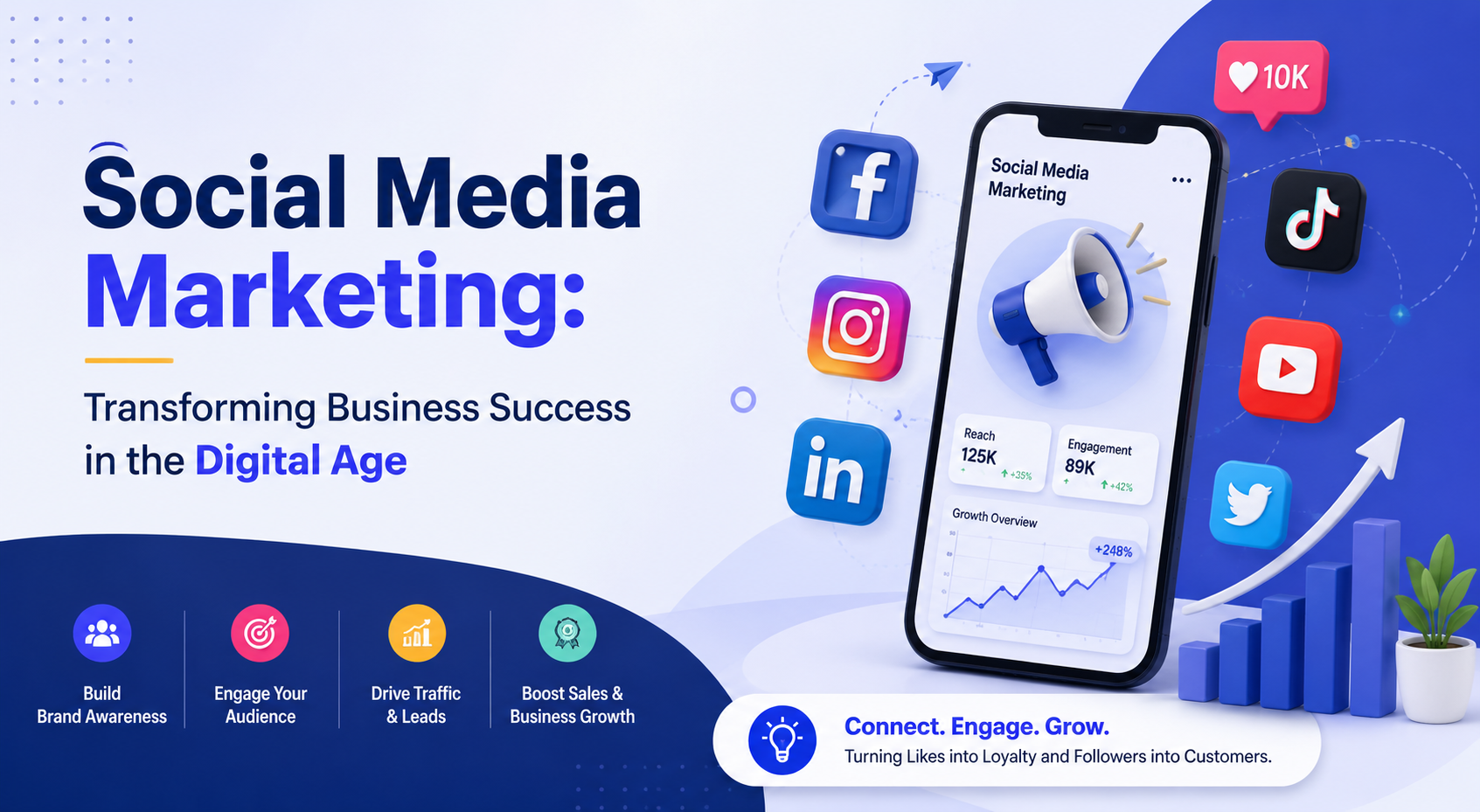
Social Media Marketing: Transforming Business Success in the Digital Age
The way businesses connect with customers has changed significantly over the past decade. Traditional advertising methods are no longer enough to capture audience attention in a fast-moving digital environment. Today, social media marketing has become one of the most effective ways for businesses to promote their brand, engage with customers, and drive sustainable growth.
Social media platforms have evolved into powerful marketing channels where companies can interact directly with their target audience. From startups to large enterprises, businesses across all industries are using social media to increase visibility, build trust, and generate sales. When used effectively, social media marketing can create long-term value and help brands stay competitive in an ever-changing marketplace.
Understanding Social Media Marketing
Social media marketing refers to the use of online social platforms to promote products, services, or business messages. It involves creating and sharing content such as posts, videos, stories, advertisements, and interactive campaigns to connect with users.
The purpose of social media marketing is not just promotion. It is about building relationships with audiences through valuable content and meaningful communication. Businesses can use these platforms to educate customers, answer questions, collect feedback, and strengthen brand loyalty.
Popular platforms such as Facebook, Instagram, LinkedIn, YouTube, Pinterest, and X each offer unique opportunities for businesses to reach different audience segments. Choosing the right platform depends on the company’s goals and target market.
Why Social Media Marketing is Essential
Social media has become an integral part of daily life for billions of people worldwide. Customers now spend a large portion of their time browsing social platforms, discovering brands, and making purchase decisions based on online interactions.
For businesses, this creates a valuable opportunity to connect with potential customers where they already spend their time.
One of the strongest advantages of social media marketing is visibility. A consistent online presence keeps a business in front of its audience and increases recognition.
It is also budget-friendly compared to many traditional advertising methods. Businesses can start with minimal investment and scale their campaigns as they grow.
Another major advantage is precise audience targeting. Social media advertising tools allow businesses to focus on specific groups based on age, interests, location, online behavior, and purchasing habits. This makes marketing campaigns more effective and measurable.
Major Benefits of Social Media Marketing
Stronger Customer Relationships
Social media creates direct communication between businesses and customers. Quick responses to comments and messages help build trust and improve customer satisfaction.
Increased Brand Recognition
Regular posting and audience interaction help businesses become more familiar to potential customers, strengthening overall brand awareness.
More Website Visitors
Sharing links to websites, blogs, and product pages encourages users to explore a business further, increasing traffic and opportunities for conversion.
Improved Lead Generation
Strategic campaigns can attract potential customers through engaging posts, contests, forms, and promotional offers.
Access to Real-Time Insights
Social media platforms provide analytics that help businesses understand what content performs best and what customers are most interested in.
Effective Strategies for Social Media Success
To get the best results, businesses need a well-planned approach rather than random posting.
Set Clear Objectives
Businesses should define specific goals such as boosting engagement, increasing followers, generating leads, or improving sales.
Know the Audience
Understanding customer preferences and behavior helps create content that is relevant and appealing.
Focus on Quality Content
Content should be valuable, visually attractive, and informative. Videos, reels, infographics, and interactive posts often generate better engagement than plain text.
Post Consistently
Maintaining a regular posting schedule keeps the audience engaged and helps build stronger brand presence.
Invest in Paid Promotions
Organic reach alone may not always deliver desired results. Paid social media campaigns can expand reach and attract targeted audiences faster.
Analyze and Improve
Monitoring campaign performance helps identify strengths and areas for improvement, allowing businesses to refine future strategies.
Challenges Businesses Face
Despite its many benefits, social media marketing also presents challenges.
One of the biggest difficulties is standing out in crowded digital spaces. Thousands of businesses compete for attention every day.
Another challenge is adapting to constant platform updates and algorithm changes that affect content visibility.
Producing fresh and engaging content consistently can also be demanding, especially for small businesses with limited resources.
Managing customer expectations and maintaining timely responses across multiple platforms requires dedication and organization.
Emerging Trends in Social Media Marketing
The future of social media marketing is being shaped by technology and changing consumer preferences.
Short-form videos continue to dominate engagement rates, making platforms like Instagram Reels and YouTube Shorts increasingly important.
Artificial intelligence is helping businesses create personalized customer experiences and automate responses.
Influencer partnerships remain a valuable strategy for building credibility and reaching niche audiences.
Social commerce is also growing rapidly, allowing customers to discover and purchase products directly within social platforms.
Businesses that stay updated with these trends can create stronger connections with their audience and maintain a competitive edge.
Conclusion
Social media marketing has become a crucial part of modern business strategy. It offers businesses the opportunity to build meaningful customer relationships, increase brand awareness, and drive measurable growth.
Success requires creativity, consistency, audience understanding, and continuous adaptation to changing digital trends. Companies that invest in a smart social media strategy will be better positioned to thrive in today’s connected business landscape.