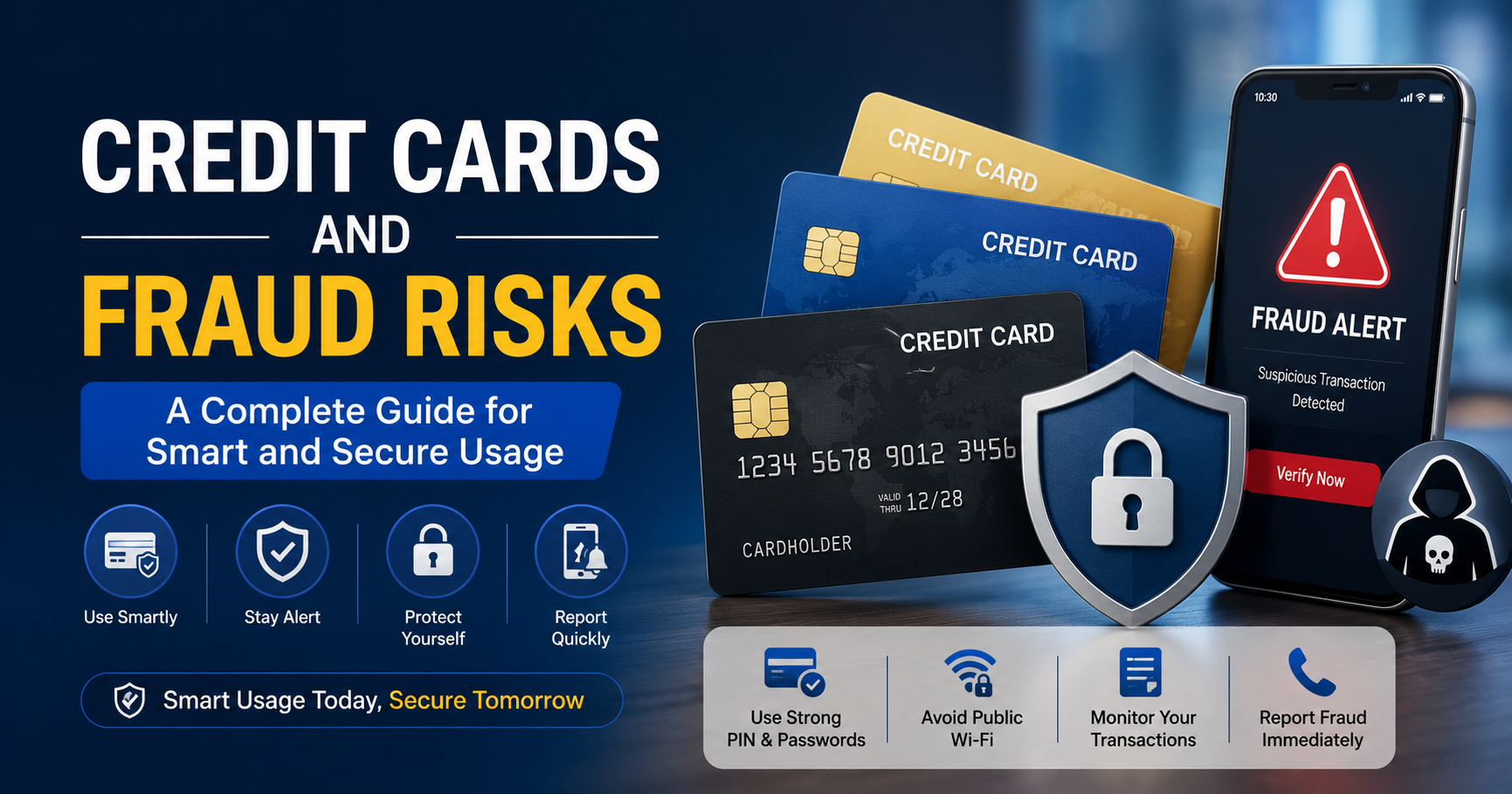
Surge in Credit Card Fraud Cases Highlights Need for Greater Digital Payment Security
As digital payments continue to dominate financial transactions, the increasing number of credit card fraud cases has raised serious concerns among consumers and banking institutions. Financial experts are urging cardholders to remain cautious as cybercriminals adopt more advanced techniques to exploit digital payment systems.
Credit cards have become a preferred payment option due to their convenience, flexibility, and added benefits such as reward points, cashback offers, and travel advantages. From online shopping and utility bill payments to travel bookings and emergency spending, they play a vital role in modern financial management. However, this widespread usage has also made credit cards a frequent target for fraud.
Recent trends indicate a sharp rise in cyber fraud linked to digital banking and card transactions. Banking professionals report that fraudulent activities such as phishing scams, ATM skimming, unauthorized online purchases, and identity theft are becoming increasingly sophisticated.
Phishing remains one of the most common threats. Fraudsters impersonate bank representatives through calls, emails, or text messages and trick users into revealing confidential information like OTPs, CVV numbers, and card PINs. Many victims unknowingly share these details, resulting in unauthorized withdrawals and online purchases.
ATM and payment terminal skimming has also emerged as a major challenge. Criminals install hidden devices on machines to capture card information during transactions. This data is later used to clone cards or conduct illegal purchases.
The rise of e-commerce has further increased the risk of card-not-present fraud, where stolen card details are used for online transactions without requiring physical access to the card. Security experts warn that unsecured websites and unsafe payment gateways remain vulnerable points for such fraud.
Identity theft linked to credit card misuse is another growing concern. Fraudsters use stolen personal documents to open new credit card accounts, often leaving victims with unexpected debts and damaged credit histories.
In response, banks and financial institutions are adopting stronger security measures. Advanced technologies such as artificial intelligence-based fraud detection, biometric authentication, tokenized payments, and real-time transaction monitoring are helping identify suspicious activities faster than ever before.
Consumers are being advised to take preventive measures by regularly reviewing transaction statements, enabling instant banking alerts, avoiding public Wi-Fi for financial transactions, and never sharing confidential card details with anyone.
Financial analysts emphasize that while digital payment systems offer unmatched convenience, awareness remains the most effective defense against fraud. As digital transactions continue to expand rapidly, experts stress that informed and cautious card usage is essential for maintaining financial security.
The growing concern around credit card fraud serves as a reminder that while technology simplifies payments, it also demands greater responsibility and vigilance from every cardholder.